Thursday, 19 April 2018

Winter Ride to Spiti Valley - Day 1

3 March 2018. The day I was eagerly waiting for. I landed in Chandigarh at 7 am after taking an early morning flight from New Delhi. Thanks to the 11 pm flight I took from Pune to New Delhi the previous day, I was left with no option but to spend the night at the airport lounge and had to manage with just a couple of hours of sleep! Luckily, Abishek had reached Chandigarh a day prior and checked into a hotel in Zirakpur on the Shimla highway itself so we were saved the hassle of entering the main city.

Abishek had thoroughly checked both our motorcycles- a Royal Enfield Classic 500 and a Classic 350 the previous evening. Since we were embarking on a ride to Spiti, naturally we expected the machines to be in top-notch condition, which they indeed were! Duly serviced and aptly customized for touring, each motorcycle came with a raised handlebar, off-road tyres, gel seats, USB charger and a luggage carrier. Just FYI, we had booked our motorcycles through Garrari Junkees, who are hands down the best out there! So next time any of you needs a motorcycle in Chandigarh, you know where to go! (You can thank me later :P)

From a maintenance perspective, we carried the entire toolkit and every spare part (including spare saddlebags) that you can think of- tubes, cables, levers etc. Obviously, if something went wrong, we had to help ourselves and hence, we did not want to take any chances whatsoever. 

I reached the hotel, took a quick shower, geared up and put all my luggage into the tail bag so we could directly start riding once we were done with breakfast. If I recollect correctly, it was at about 9.30-10 am that we started our ride after fueling up. The planned destination for the night was Narkanda, approximately 65 km beyond Shimla. A couple of Abishek’s friends, Murli and Ghanshyam, natives of Manali were supposed to join us at Shimla so we decided to head there straight for lunch without wasting much time.

First halt for tea enroute Shimla

The road all the way to Shimla, barring a few under-construction patches, is well laid out. The weather improved tremendously as we proceeded and it started getting cold beyond Kasauli. With mountains and hamlets all around, the view was breathtaking and the cool breeze indeed was giving a different high!

Entering Himachal Pradesh from Punjab

With a few halts in between for tea and pictures, we made it to Shimla in good time- around 3 hours and the temperature was somewhere around 8-10 degrees. Yes, it was cold out there but this was just the beginning and nothing compared to what lay ahead in store for us. It also started getting dark so we took out our rain gears. From here, we were 4 of us on 2 motorcycles and 1 gypsy. It is always great to meet new people whilst on the road, more so when you share a common passion. 

Once the mountains start, you are treated to views like these continuously

Look at those houses there on the right!

Lovely winding mountain roads

After spending about an hour or two in Shimla, we started our journey towards Narkanda. We were supposed to ride through Kufri and Theog, where the possibility of fresh snowfall was considerably high. However, apart from some chilly drizzle, we managed to get out of these towns safely. 

One of Ghanshyam's friend, a native of Theog, had invited us to his house for some amazing chai and snacks. And of course, it was hard to resist the offer when we saw the house. Look at some of the pictures here-

Abishek just posing outside Ghanshyam's friends house in Theog

Inside the house. Nicely warmed up!


That was how the approach road to the house was

View from the house
We made it to Narkanda by about 6.30-7 pm. Unfortunately, there was just 1 good hotel that was open but had only a single room available. It was almost dark and we had no option but to ride further and search for accommodation. 

This is the beautiful tiny town of Narkanda and there you can see the highway

One on the road!

Murli and Ghanshyam went ahead and after about 20 km, found a fantastic place 1 km off the highway overlooking the mountains in a small town called Kumarsain. Unfortunately, however, Abishek and I took a brief halt for tea about 10 km before Kumarsain to enjoy the lovely rain and weather and eventually ended up riding almost 9 km beyond the hotel simply because we couldn't spot the hotel on the main highway. It was pitch dark and luckily both of us had full network connectivity so we turned back. Finally, at about 8 pm, we parked our motorcycles and unpacked all our luggage. Good quality rain gears and footwear ensured that we weren't drenched! 

Some lovely dinner and conversations followed and since I already wanted to catch up on sleep, I fell flat at about 11 pm. 

Looking back, it was an eventful day indeed because we rode further than we initially planned and experienced rains when the surrounding air temperature was about 7-8 degrees. But this was just the beginning. And mind you it rained all night pretty heavily. Probably snowed too, who knows! ;-)

All set for some rain and snow!!
Route- Chandigarh - Kasauli- Shimla- Kufri- Theog- Narkanda- Kumarsain


To know more about what the next day had in store for us, keep watching this space!

Tuesday, 17 April 2018

Balls of Steel and an Iron Butt - Prelude to a Winter ride to Spiti Valley


Ever since I rode to Ladakh in July 2017, people kept on asking me what is it that draws me there year after year. Kashmir has (and probably always will be) been the place I always turn to, to revitalize and rediscover myself. Then someone asked if I had been to Spiti Valley. In all fairness, till November 2017, all I knew about Spiti Valley was that it is as picturesque as Ladakh is, if not more. Pretty naïve I know!

The more I started reading about this region, the more I came to terms with the magnificence of this region. From its snow-capped mountains and beautiful monasteries perched over a barren landscape to pristine lakes and some of the world's highest villages tucked in the lap of the Himalayas, Spiti Valley seemed breathtaking from pictures. Add the rare wildlife, culture, and cuisine and you quickly realize Spiti Valley has something for everyone. 

The adventure-seeker in me since then desperately wanted to bike my way till Spiti to explore the beauty of this Trans-Himalayan region, called as "a world within a world" and embrace the wilderness at altitudes of up to 4500 meters above sea level. 

I guess my heart got the better of my mind and a winter motorcycle expedition to Spiti Valley was not only planned, it was definitely happening when a fellow Versys rider from Bangalore, Abishek Venkatesh, pitched the idea of a winter ride. Flights to Chandigarh were booked, motorcycles were finalized and a 10 day plan (8 day ride + 2 buffer days) was made in no time! If everything went right, this was going to be a once in a lifetime journey (I know I say this often, but I cannot help it if every ride becomes a once in a lifetime journey! :P)

Crazy excitement as I land in Chandigarh!

A lot of people make you believe that this region is inaccessible in the winters but if you are iron-hearted and have the will to face the bone-chilling cold, this is the best time to visit. There is hardly anyone around and you have the entire region to yourself. It is the perfect time to see the life in Spiti as it has existed for several centuries- when life comes to a complete standstill as temperatures plummet to -25 degrees Celcius. Spiti valley is primarily thought of as a summer destination that offers incredible vistas but winters are beyond mesmerizing - it is a sea of white as far as your eyes can behold! 

Getting to Spiti Valley in Winter 


The entire Spiti region, bordered by Tibet in the east, Ladakh to the north, Kinnaur to the south-east and Lahaul valley and Kullu to the south, is a cold desert mountain valley situated at an altitude of around 4000-5000 meters above sea level. 

Travel from Manali isn’t possible in the winters because Rohtang La and Kunzum La, two high altitude mountain passes close around mid-October and only open by mid-May on account of heavy snowfall. The only possible way to reach Spiti is by road from Shimla via NH-505 crossing Kinnaur. 

The road from Shimla to Kaza is kept open throughout the year and is shut (anywhere from a few hours to a couple of days) only in case of heavy snowfall between Tabo and Kaza.

What you MUST carry


  1. Sunglasses - a must to protect you from the reflection of the snow, the sun’s glare is unusually high in Spiti
  2. Sunscreen – It is advisable to apply sunscreen generously because the sun’s rays are sharp (I never used them though!)
  3. Flask- Water in bottles is bound to freeze; hence, carrying warm water in a flask is advisable. It is extremely important to stay hydrated by drinking lots of water at regular intervals
  4. Energy bars – Protein bars, dry fruits and dark chocolates are highly recommended to maintain energy levels
  5. Winter clothing – You will DIE if you do not carry appropriate clothes. The thumb rule is to dress in layers- typically two layers of thermal inners, two layers of shirts/t-shirts and your riding jacket with a thermal liner to be worn above all this. It is also recommended to carry a raincoat
  6. Footwear – Woolen socks and good waterproof shoes that can withstand sub-zero temperatures 

Itinerary


Although we knew things can always go wrong in the winters and no planning can help, we chalked out an itinerary. The originally planned itinerary had to be improvised during the ride owing to weather and road conditions, so the route that you see below is the one we took while on the ride. Though we initially planned to return via Narkanda itself, we returned via Jalori Top (more about that later ;-) ) It is best to think practically and live on a day to day basis, but this what we followed:

Day 1 – Chandigarh – Narkanda – Kumarsain (200 km)
Day 2 – Kumarsain – Rampur – Sarahan - Sangla (175 km)
Day 3- Sangla – Rakchham – Chitkul – Pooh (160 km)
Day 4- Pooh – Khab – Nako – Tabo – Gue – Dhankar – Kaza (210 km)
Day 5- Kaza – Key – Kibber – Hikkim – Komic – Langza – Tabo (140 km)
Day 6- Tabo – Spillow – Kalpa – Reckong Peo (200 km)
Day 7- Reckong Peo – Jalori Pass – Jibhi (220 km)
Day 8- Jibhi – Kullu- Mandi – Bilaspur – Kirtpur Sahib – Chandigarh (270 km)

Now that I am back safe, I must admit that Spiti Valley indeed is special- a perfect and gracious blend of Indian and Tibetan culture. Want to find out why?

Stay tuned as I walk you through each day of our ride, starting from Chandigarh, complete with the smallest details and tell you how Spiti valley managed to occupy a permanent place in my heart! 


Wednesday, 21 February 2018

Ride Review - Kawasaki Versys 650 vs Suzuki VStrom 650 XT

When you talk about a sub-liter class adventure touring motorcycle, there are virtually no options in the Indian market. So naturally, there was no way I was letting go of the opportunity to ride the Suzuki VStrom 650 XT for a week in North Thailand!


It is quite apt to view the Suzuki VStrom 650 and the Kawasaki Versys 650 in the same league, the major point being the latter sells in India and the former doesn't. Both these motorcycles are baby versions of their 1000 cc counterparts; however, the 650cc variants provide not only a cost-effective entry point into the lucrative adventure tourer category, a gradually growing segment in a maturing two-wheeler market but also the same versatility as their 1000 cc variants. 

Ever since I extensively rode the 2017 Suzuki VStrom 650 XT for about 1700 km, I have been getting numerous requests from fellow riders and motorcyclist friends to compare and contrast the VStrom 650 with the Versys 650, which I proudly own. It is the first time I am penning a review of any motorcycle, but rest assured, I will give it my best shot.

Let me start off by comparing features on each of them one by one-

Looks

Arguably the better looking of the two, the Versys looks sportier and more compact. Looks are anyway a personal choice so I will leave this distinction at that. What matters beyond looks is what a motorcycle offers the rider!

Front View of the 2017 VStrom 650 XT
Seat Height-

If you are shorter than 5’8’’, the 841 mm seat height on the Versys will make you uncomfortable at certain times, especially on steep downhills and in city traffic, because your feet won't rest firmly on the ground which means you will be tiptoeing! The VStrom on the other hand, will be more comfortable if you are slightly shorter owing to its 6 mm lower seat height than the Versys. 6’2’’ and taller, you may find the compact seating of the Versys more apt than the VStrom. 

Power and Torque-

In terms of pure numbers, both the motorcycles are nearly identical with the VStrom offering a tiny amount more power and the Versys offering a tiny amount of more torque. Practically, the Versys has a higher mid-range torque and its throttle response is also livelier and quicker, sometimes so much so that it scares you! However, the downside is that the Versys 650 has a jumpy throttle response at lower rpms. Refinements of these minute downsides is what you get to see on the VStrom. However, I would say that the differences are negligible. 

Relaxed seat height w.r.t Versys 650
Display Panel- 

The Versys' panel includes a gear indicator, rpm meter, odometer, two trip meters, fuel mileage, range, fuel meter and time of day. The V-Strom 650, meanwhile, displays air temperature in addition to everything the Versys shows you. Utility-wise, the VStrom panel is better but it looks shoddy, to say the least, when compared with the Versys.

Console of the VStrom 650 XT
Braking-

The braking on the Versys is much more responsive than the VStrom- if you want the Versys to stop, it will stop immediately; but the VStrom braking is milder and you need to exercise extra caution at higher speeds because of the sightly larger braking distance. 

1) ABS- Both the motorcycles come with ABS as standard, however, there is no option to disable it on either of them. 

2) Traction Control- The Versys 650 has no traction control (TC) and this sets the VStrom 650 apart. There are 3 levels of TC- OFF, 1 and 2 and like any other TC system, takes wheel speed, throttle position, gear and crank position to determine when to reduce power to hold traction.  

Suspension- 

Neither bike’s suspension can be classified as great; nevertheless, both the Versys and V-Strom have remote preload adjuster knobs at the rear, a real convenience while touring with luggage. 

The Versys permits preload and rebound damping adjustment at the front but only preload adjustment at the rear, while the VStrom is the exact opposite, with preload adjustment allowed at the front and rebound damping and both preload adjustment allowed at the rear. 

Handling and Maneouvring

A tall and heavy sports bike is how you would characterize the Versys. Even though it carries some bit of adventure with respect to its styling, the reality could not have been farther from the truth! 

Once you exit the highways and hit the twisties is when you realize that the VStrom emerges a clear winner. On the Versys, you are forced to juggle between flickability and abrupt throttle response and simply cannot ride extremely hard in corners because there is absolutely no scope for mid-corner corrections. The VStrom is hands-down the more dirt-oriented of the two, with a 19-inch front wheel, 90/10 on-/off-road tires and spoked rims, not to forget the ADV-style beak! If at all you find yourself staring down a rocky patch of road- dirt, gravel or whatever, the VStrom gives you the confidence you need to manage such terrain in the sense that if the rear end does come loose, the traction control immediately kicks in. This assurance that all is well makes it an extremely capable adventure motorcycle.

TC is a gem and the tyres have superb wet grip!
On the road, however, the Versys steers telepathically. It is extremely easy to pick a line and even if you change your mind and pick another line, the Versys will do it for you in the slightest of efforts. 

The VStrom’s V-twin engine is remarkable in terms of user feedback and response to the rider making it gentler compared to the Versys’ hyper-energetic parallel twin engine. 

Wind Protection- 

Wind protection on the Versys is hands-down better, while it is just adequate on the VStrom. To put things in perspective, the V-Strom’s windscreen creates less buffeting around the rider’s head but less protection around the body. However, the Versys’ adjustable windscreen provides more effective body protection and head buffeting.

Vibrations-

The V-Twin engine of the VStrom is an absoute gem and virtually no vibration makes its way to the footpegs or handle bars, regardless of engine speed. If at all the vibrations are felt, they are scarce and through the seat only. On the parallel twin engine of the Versys, there are slight vibes felt at higher speeds, especially on the mirrors, but neutralized to a large extend by the rubber-clad footpegs and larger bar-end weights. 

Overall, engines on both these motorcycles are extremely refined and the impeccable on-road etiquette of these machines will make anyone want to ride them far and beyond! 

Other Accessories- 

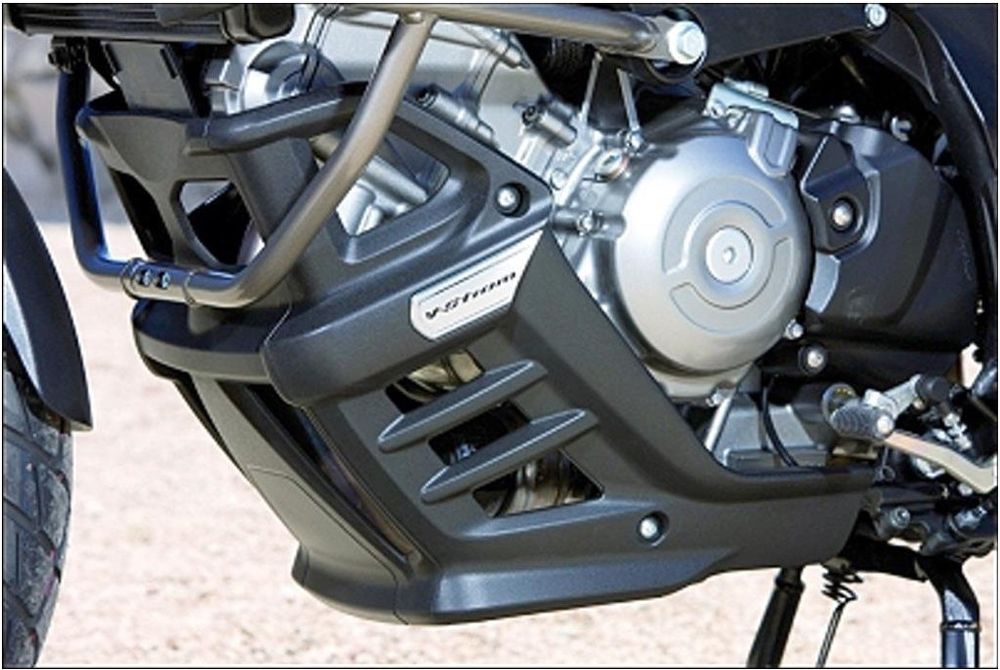
A standard 12V socket next to the display, plastic handguards and a lower engine cowl come as standard accessories on the VStrom, all of which are optional on the Versys. 


Final Verdict-

Electronics and rider aids are basic on both these machines, but that’s acceptable considering these are built to be attractive both in price and utility. However, with it’s impeccable handling and maneouvring, adventure-readiness and corner-carving capability, the VStrom 650 literally stole my heart. A relaxed tourer with ABS and Traction control as standard combined with the ability to magically whiz past even carelessly maintained roads (that's the feeling I got!) would definitely make the VStrom 650 XT my first choice! 


Just in case you are interested, have a look at this-

Tech Spec
Kawasaki Versys 650 LT
Suzuki V-Strom 650 XT
Price (Approx.)
8.1 Lakh
8.6 Lakh (Converted Price)
Engine
649cc, Liquid-Cooled Parallel-Twin
645cc, Liquid-Cooled 90° V-Twin
Valve Train
Dohc, 4 Valves Per Cylinder
Bore X Stroke
83.0 X 60.0 mm
81.0 X 62.6mm
Compression
10.8:1
11.2:1
Fuel System
EFI
EFI
Clutch
Wet, Multi-Plate
Wet, Multi-Plate
Transmission
6-Speed/Chain
6-Speed/Chain
Frame
High-Tensile Steel Trellis Frame, Steel Gullwing Swingarm
Cast Aluminum Twin-Spar, Cast Aluminum Swingarm
Front Suspension
Showa 41mm Fork, Adjustable For Spring Preload And Rebound Damping; 5.9 inch travel
Showa 43mm Fork Adjustable For Spring Preload; 5.9 inch travel
Rear Suspension
Showa Shock Adjustable For Spring Preload; 5.7 inch travel
Showa Shock Adjustable For Spring Preload And Rebound Damping; 6.3 inch travel
Front Brake
Nissin Two-Piston Calipers, 300mm Discs With Abs
Tokico Two-Piston Calipers, 310mm Discs With Abs
Rear Brake
Nissin One-Piston Caliper, 250mm Disc With Abs
Nissin One-Piston Caliper, 260mm Disc With Abs
Front Tire (Stock)
120/70 R17 Dunlop Sportmax
110/80 R19 Bridgestone Trail Wing
Rear Tire (Stock)
160/60 R17 Dunlop Sportmax
150/70 R17 Bridgestone Trail Wing
Rake/Trail
25.0°/109 mm
25.3°/109 mm
Seat Height
841 mm
835 mm
Wheelbase
1415 mm
1560 mm
Measured Weight (Wet/Dry)
232/212 kg
240/222 kg
Fuel Capacity
21 L
20 L
Fuel Mileage
City- 18 kmpl
Highway – 21 kmpl
City – 22 kmpl
Highway – 25 kmpl
Range
400 km
450 km
Warranty
24 months or 30000 km, whichever is earlier
12 Months and Unlimited Mileage